

Deciding to start therapy is an important step toward taking care of your mental health. But once you make that decision, another question often comes up: Should you meet with a therapist in person or choose online therapy?
Perhaps you like the idea of sitting face-to-face with someone in a comfortable office. Or maybe the convenience of speaking with a therapist from home feels more manageable, especially when balancing work, parenting, school, or other responsibilities.
Both options can provide meaningful mental health support. The right choice depends on your personal needs, comfort level, schedule, and the challenges you want to address.
Understanding the differences between in-person and online therapy can help you make a confident, informed decision about your mental health care.
Understanding In-Person and Online Therapy
Although the setting may be different, both approaches share the same fundamental goal: helping you better understand your emotions, navigate challenges, and develop healthier coping strategies.
What Is In-Person Therapy?
In-person therapy involves meeting with a licensed mental health professional at a physical office or counseling center.
Sessions typically take place in a private, comfortable environment where you and your therapist can speak without distractions.
Some people appreciate having a dedicated space away from home to discuss personal concerns.
What Is Online Therapy?
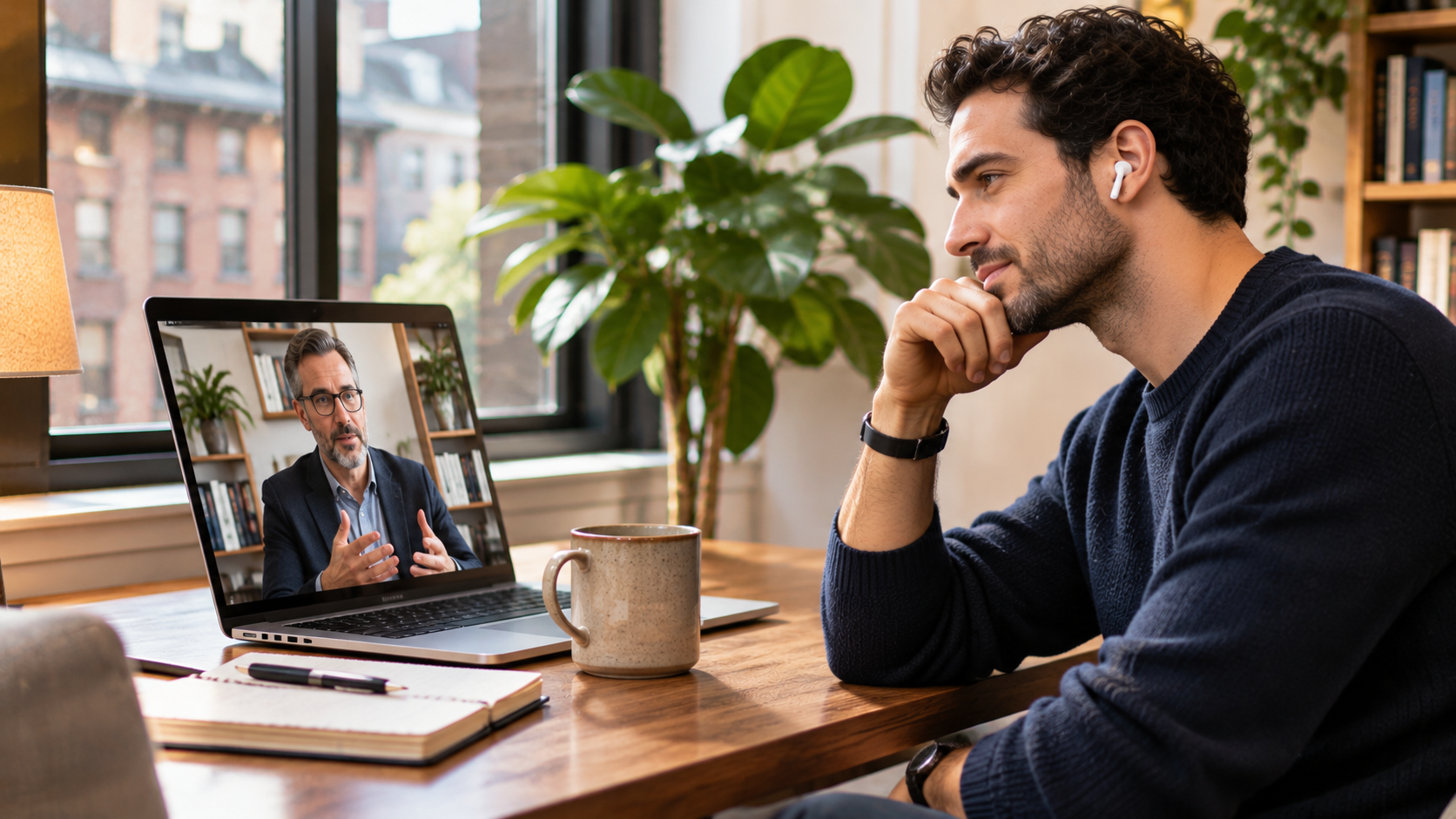
Online therapy, also called teletherapy or telehealth counseling, allows you to meet with a licensed therapist remotely, usually through a secure video platform.
You can participate from a private space at home or another appropriate location.
For people living throughout New York State, online therapy can make professional support more accessible without requiring travel to a therapist’s office.
1. Convenience and Accessibility
One of the biggest differences between online and in-person therapy is accessibility.
With traditional therapy, you may need to consider transportation, parking, traffic, childcare, or time away from work.
For example, someone working in Manhattan may find it difficult to attend an appointment across the city during business hours.
Online therapy removes much of that travel time.
Instead of commuting, you can attend a session from a quiet room at home or another private setting.
This flexibility may be particularly helpful for busy professionals, parents, college students, and people living in areas with fewer nearby mental health providers.
However, online therapy still requires a reliable internet connection, a suitable device, and enough privacy to speak openly.
2. Comfort and Emotional Connection
Some people feel more comfortable discussing sensitive topics when sitting directly across from their therapist.
An in-person setting allows both individuals to observe body language, facial expressions, and other nonverbal cues without the limitations of a screen.
For others, the familiarity of home can make difficult conversations feel less intimidating.
For example, someone experiencing social anxiety might initially feel more comfortable speaking with a therapist through video rather than entering an unfamiliar office.
A strong therapeutic relationship matters more than simply choosing one setting over another.
Research suggests that online psychotherapy can be effective for many mental health concerns, particularly when delivered through structured, evidence-based approaches.
The most important consideration is whether you feel heard, understood, respected, and supported by your therapist.
3. Effectiveness of Online vs. In-Person Therapy
A common concern is whether online therapy works as well as traditional face-to-face counseling.
For many individuals, the answer is encouraging.
Research indicates that video-based psychotherapy can produce outcomes comparable to in-person treatment for certain conditions, including depression and anxiety.
Approaches such as Cognitive Behavioral Therapy (CBT) can be adapted effectively for online sessions.
However, treatment effectiveness depends on several factors, including the concern being addressed, the therapeutic approach, individual circumstances, and the quality of the therapist-client relationship.
Some situations may require in-person assessment, more intensive treatment, or additional clinical support.
A qualified mental health professional can help determine which setting is appropriate for your needs.
4. Privacy and Confidentiality
Privacy is essential in any therapeutic relationship.
In-person therapy typically takes place in an office designed to provide a confidential environment.
Online therapy also offers privacy protections when providers use appropriate secure technology and follow applicable professional and legal requirements.
However, your physical surroundings matter.
If you live with family members or roommates, finding a quiet space where conversations cannot be overheard may be challenging.
Consider using headphones, closing doors, and choosing a location where interruptions are unlikely.
Before beginning online therapy, ask your provider about confidentiality practices, technology requirements, and what happens if a session is interrupted.
5. Cost and Insurance Considerations
The cost of therapy can vary depending on the provider, location, insurance coverage, and type of service.
Online therapy may help reduce indirect expenses such as transportation, parking, or childcare.
However, online sessions are not automatically less expensive than in-person appointments.
Insurance coverage also varies by plan.
Before scheduling, consider asking your provider:
- Do you accept my insurance?
- Are online therapy sessions covered under my plan?
- What are the copayment or out-of-pocket costs?
- Are there cancellation or missed-appointment fees?
Understanding these details beforehand can help you choose an option that fits your financial circumstances.
6. Online Therapy for Couples and Families
Therapy is not limited to individuals.
Couples and families may also benefit from online counseling, especially when coordinating multiple schedules makes attending an office appointment difficult.
For example, two partners with different work schedules may find it easier to attend a video session from home.
Family therapy can also provide opportunities to improve communication, address conflict, and understand relationship patterns.
However, online sessions require appropriate privacy, participation, and technology arrangements for everyone involved.
A therapist can help determine whether remote sessions are suitable for the family’s circumstances and therapeutic goals.
7. Therapy for Children and Teenagers
Young people may benefit from either in-person or online therapy, depending on their developmental needs, comfort level, and presenting concerns.
Some teenagers feel comfortable communicating through video because they are familiar with digital technology.
Others may benefit from the structure and direct interaction of an office environment.
For younger children, therapists may use play-based activities, creative exercises, or caregiver involvement that can sometimes be easier to facilitate in person.
Parents and caregivers should discuss their child’s needs with a qualified therapist before deciding on a treatment format.
The goal is to choose an environment where the young person can participate meaningfully and feel emotionally supported.
How to Decide Which Therapy Format Is Right for You
There is no single approach that works best for everyone.
Consider your preferences, responsibilities, and mental health needs.
Online therapy may be a good fit if you:
- Have a demanding work or family schedule
- Prefer attending appointments from home
- Experience transportation or mobility challenges
- Live far from suitable mental health providers
- Have access to a reliable internet connection and private space
In-person therapy may be preferable if you:
- Feel more comfortable communicating face-to-face
- Have difficulty finding privacy at home
- Prefer a separate physical environment for emotional processing
- Need a service or assessment that requires in-person care
Some therapists also offer hybrid arrangements that combine online and in-person appointments, depending on availability and clinical appropriateness.
If you are unsure, an initial consultation can help you discuss your concerns and determine the most suitable option.
Finding the Right Online Therapist in New York
Choosing a therapist involves more than deciding between a screen and an office.
It is important to find someone who understands your concerns, respects your experiences, and uses therapeutic approaches appropriate for your needs.
When exploring online therapy, consider the therapist’s professional qualifications, experience, areas of specialization, and communication style.
You may also want to ask about their approach to anxiety, depression, relationship difficulties, trauma, parenting concerns, or other challenges you are experiencing.
For online therapy in New York, confirm that the provider is appropriately licensed or otherwise legally authorized to deliver services where you are physically located during appointments.
A supportive therapeutic relationship can help you feel more comfortable exploring difficult emotions and working toward meaningful change.
The Best Therapy Is the One That Meets Your Needs
Choosing between in-person and online therapy is a personal decision.
Both formats can provide valuable opportunities for emotional growth, greater self-awareness, and healthier relationships.
What matters most is finding an approach that feels accessible, appropriate, and supportive of your individual circumstances.
At Noble Therapy NY, we provide compassionate online therapy for adults, couples, families, and young people throughout New York State. Our therapists offer personalized support to help you navigate emotional challenges, strengthen relationships, and develop practical coping strategies.
Whether you are seeking help for anxiety, depression, relationship concerns, or personal growth, you do not have to navigate these experiences alone.
Ready to take the next step? Visit Noble Therapy NY to connect with a therapist and explore how online therapy can support your emotional well-being.